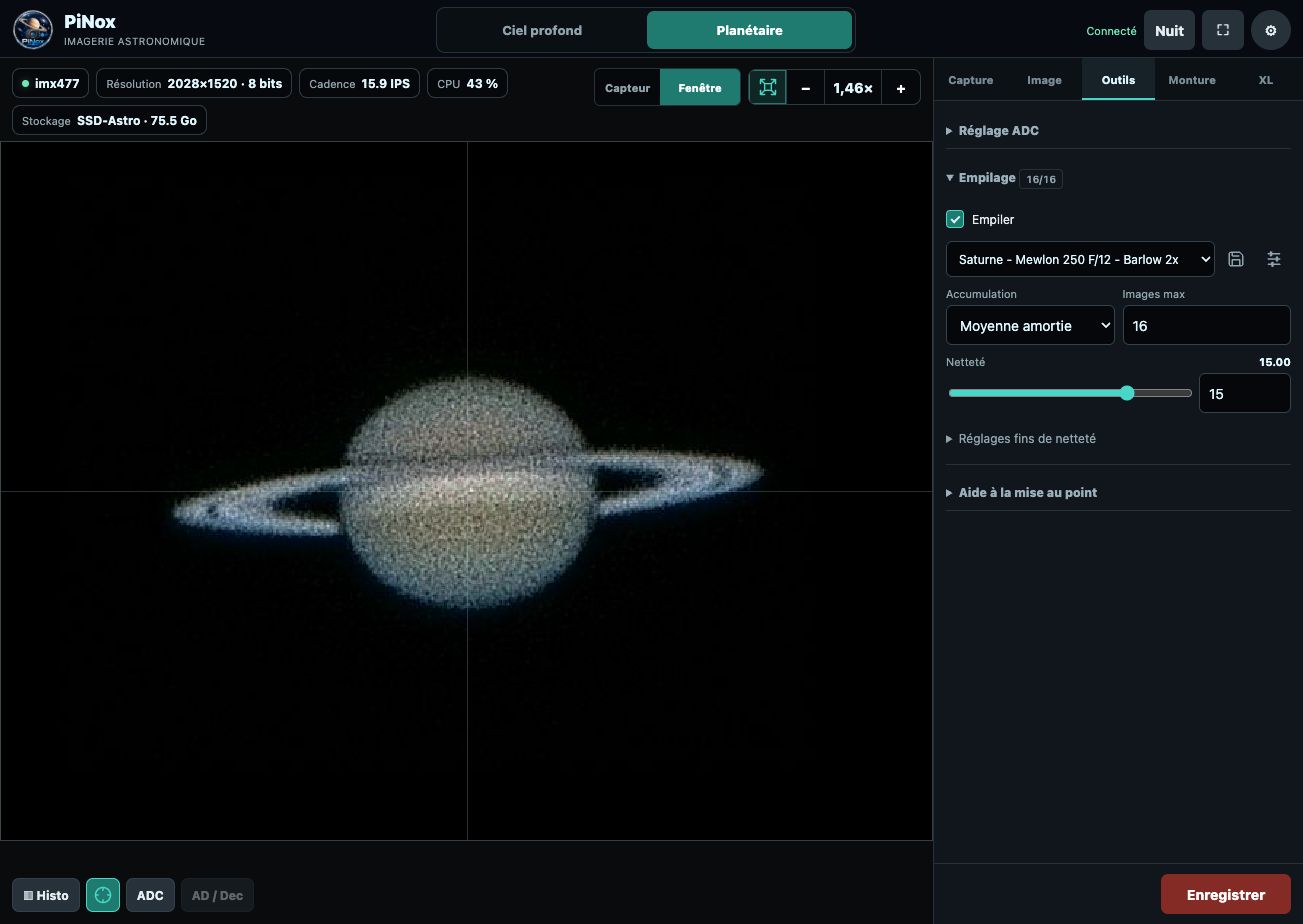
PiNox · Planetary imaging
Saturn on screen: framing, tracking and focusing with PiNox
A window that follows the planet, a stacked preview to make focusing easier and a guide for adjusting the ADC, while preserving the RAW frames.
Field tests, platform operation and measurement campaigns: here I document the development of EIP. Depending on the topic, two versions are available: Discovery to understand the mechanisms, and Scientific to examine the methods and results.
A window that follows the planet, a stacked preview to make focusing easier and a guide for adjusting the ADC, while preserving the RAW frames.
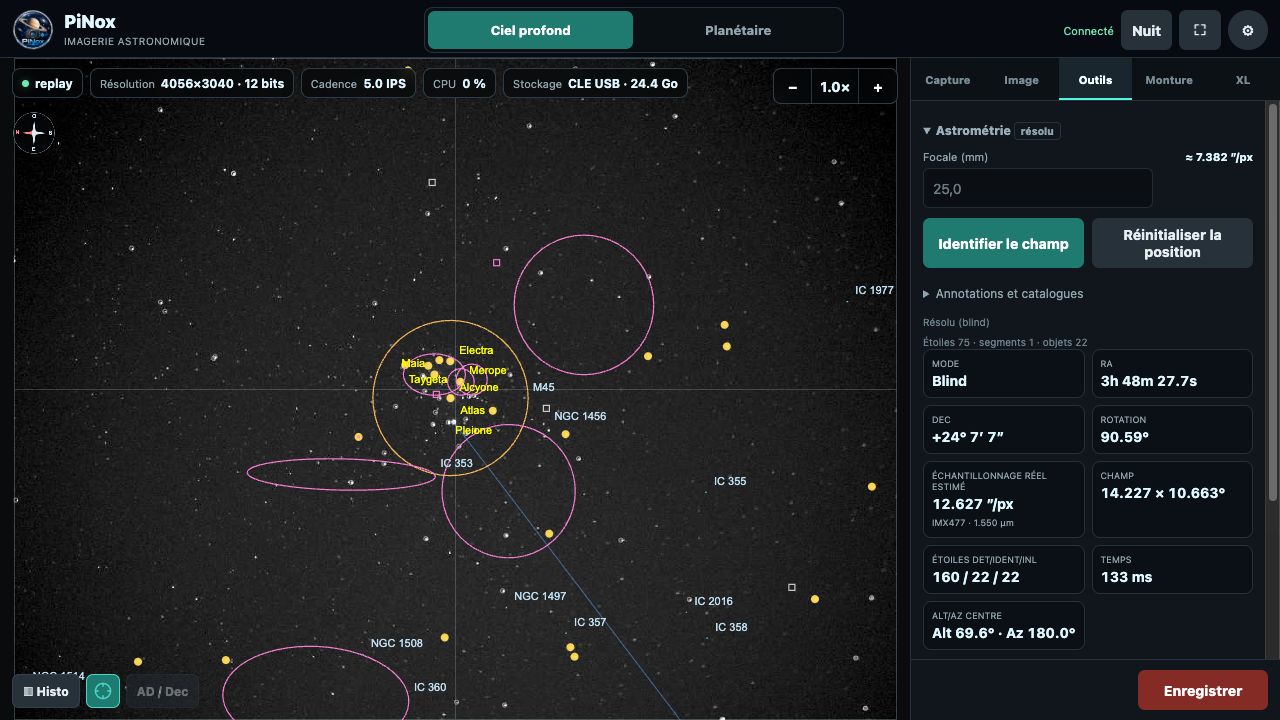
How PiNox recognises a star field and labels its objects, with help from PolarScope and two timed examples using M31 and M45.
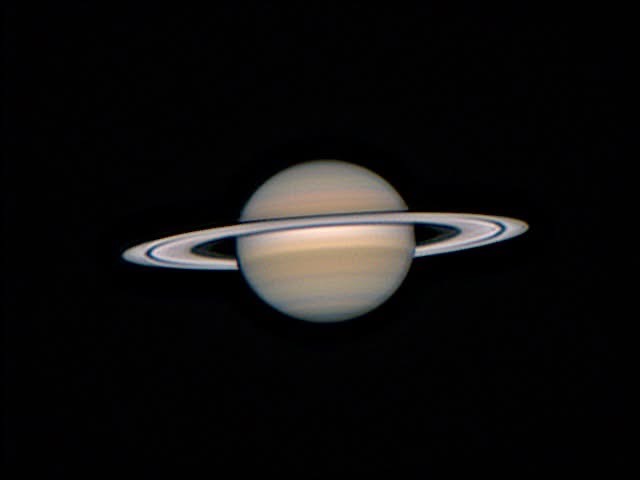
Eight videos in 8-bit RAW acquired without dropped frames, then processed with AstroSurface, without derotation. I describe the telescope setup, colour correction and automatic framing.
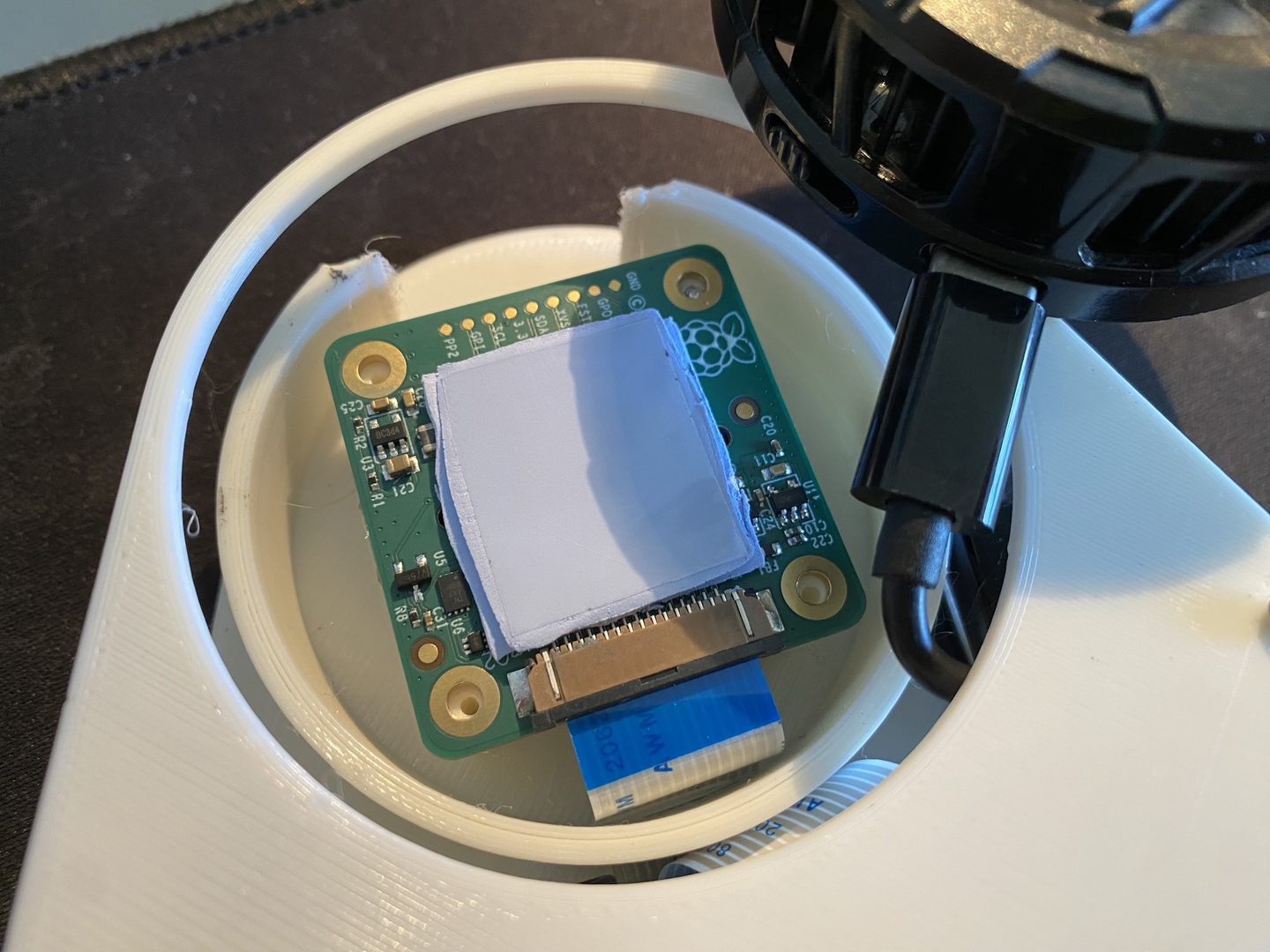
With a cooler using the Peltier effect at maximum power, the camera approaches 0 °C. What do ventilation and this cooling change in dark frames? The dark current of a typical pixel remains too difficult to isolate for a reliable measurement.
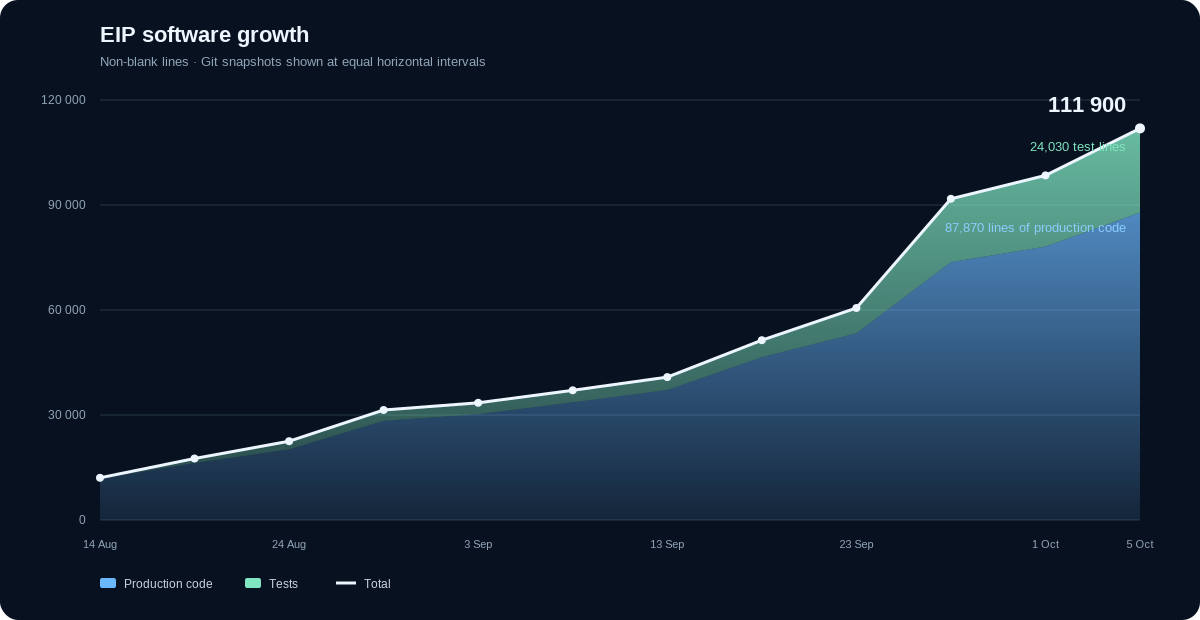
How can one acquisition supply a preview, raw recording and several web services? This article traces the transition from prototype to platform using Git history and measured performance.
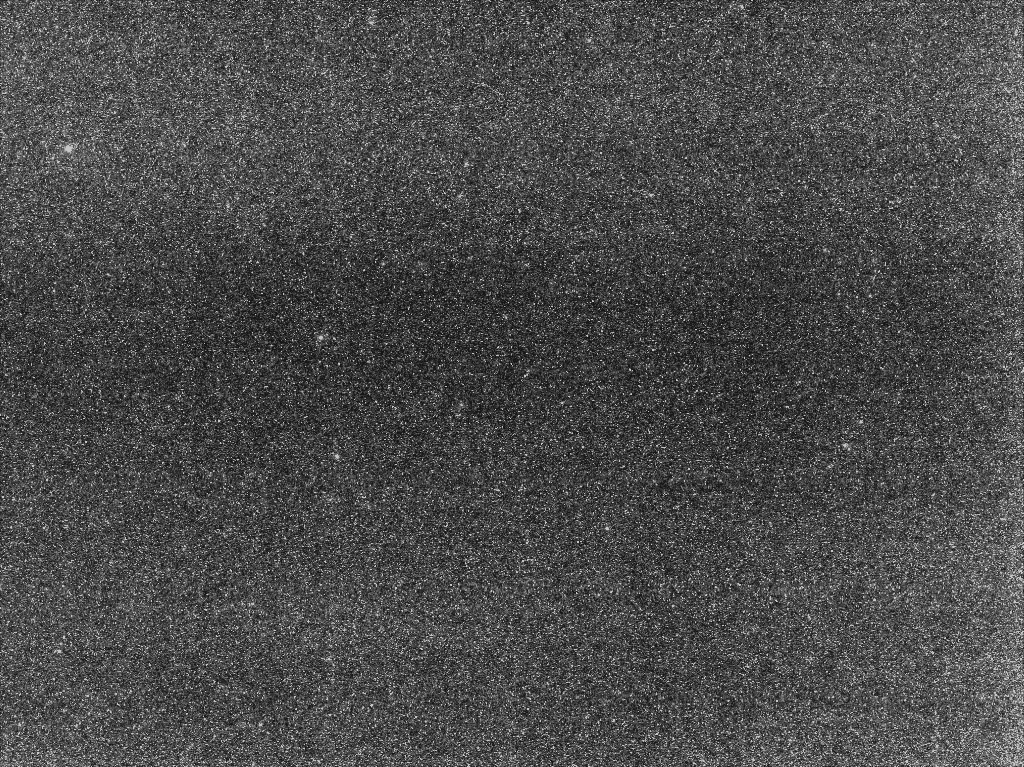
This campaign measures conversion gain and read noise, then examines long exposures and fixed patterns in dark frames. Cross-checks put the results to the test.
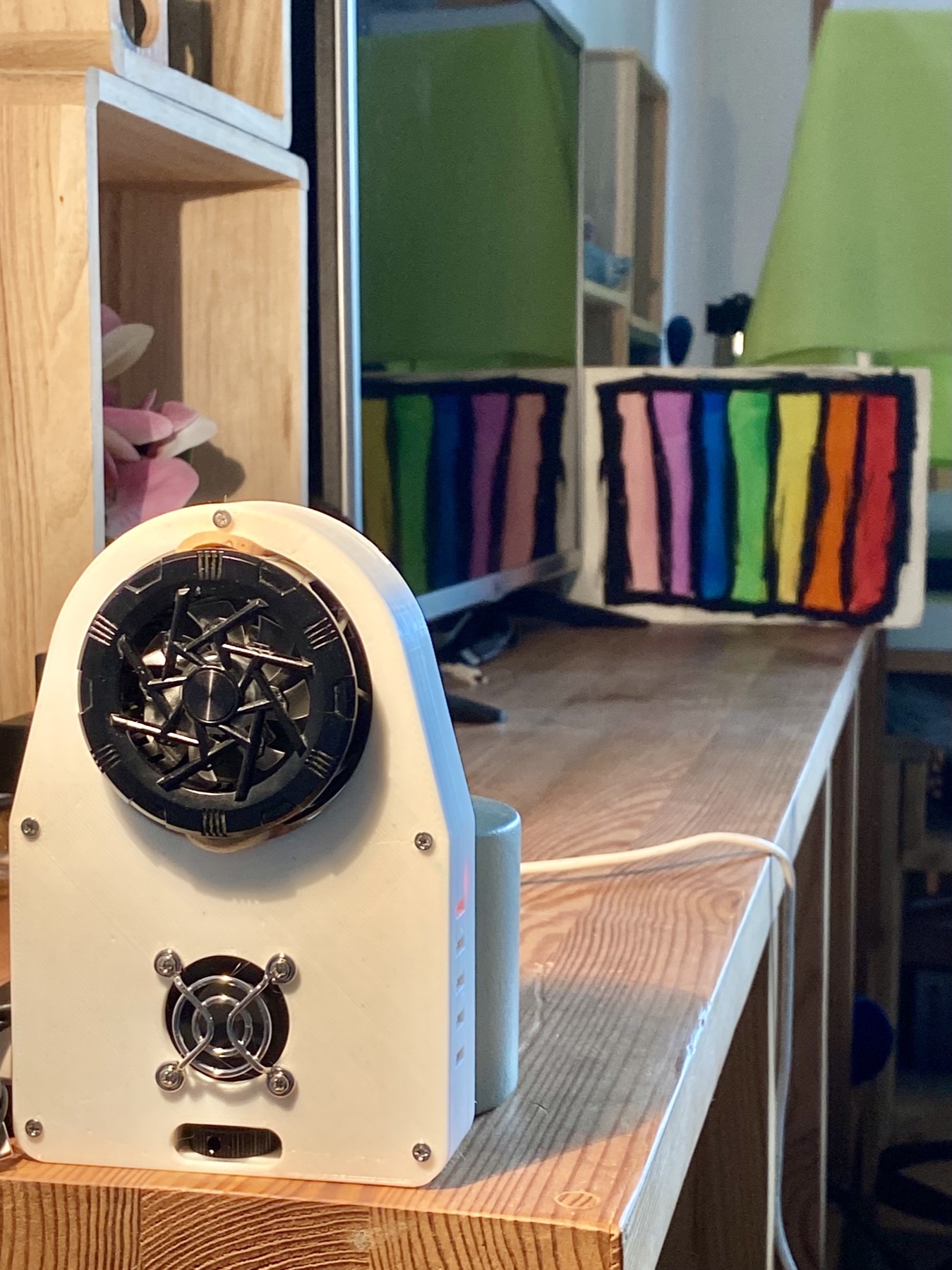
The image signal processor (ISP) in the Raspberry Pi is compared with demosaicing performed by EIP's software on IMX477 and OV5647 sensors. The study measures performance gains, black level, linearity and spatial differences between images.