Polar alignment
PolarScope, a digital polar scope
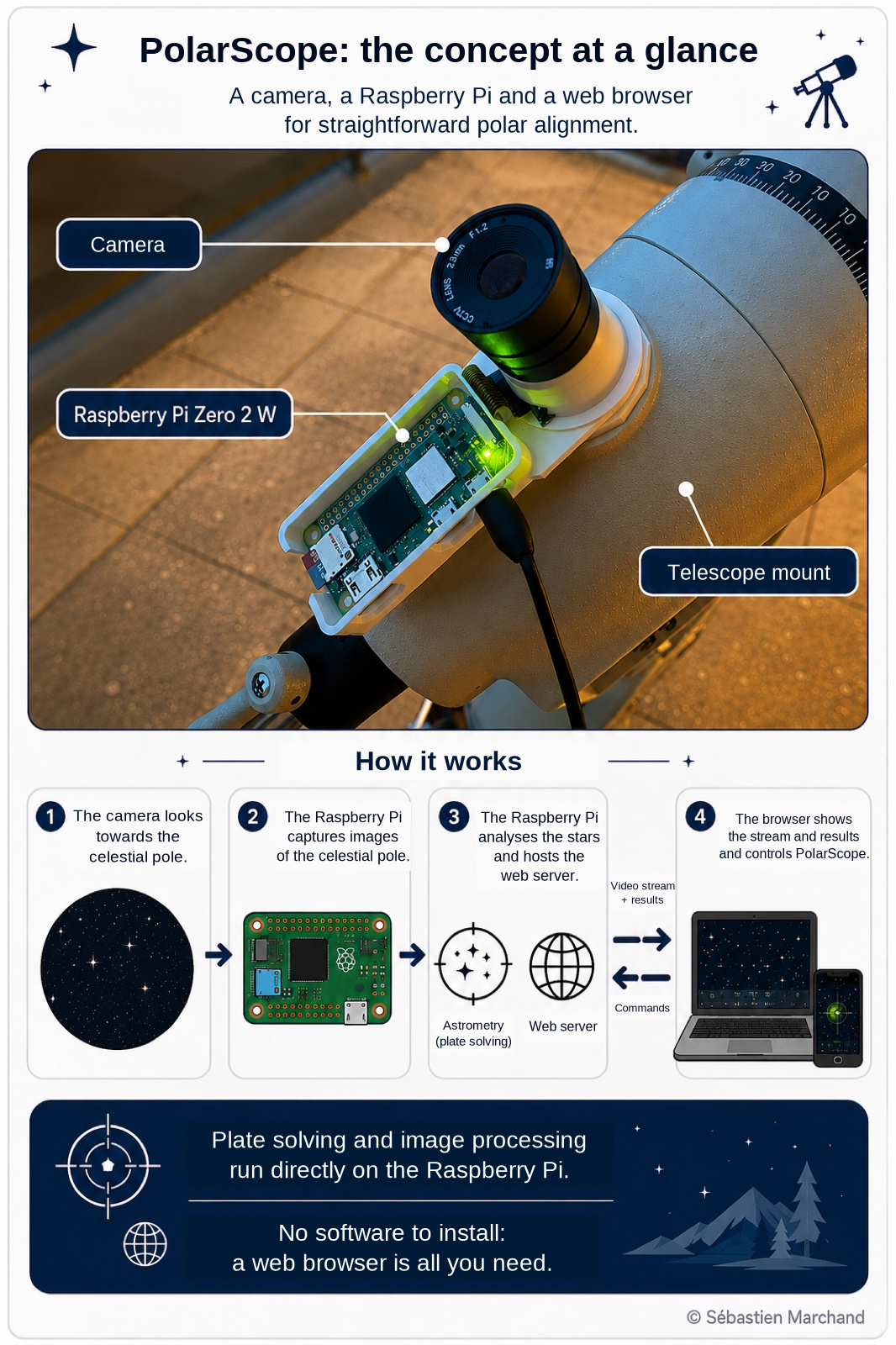
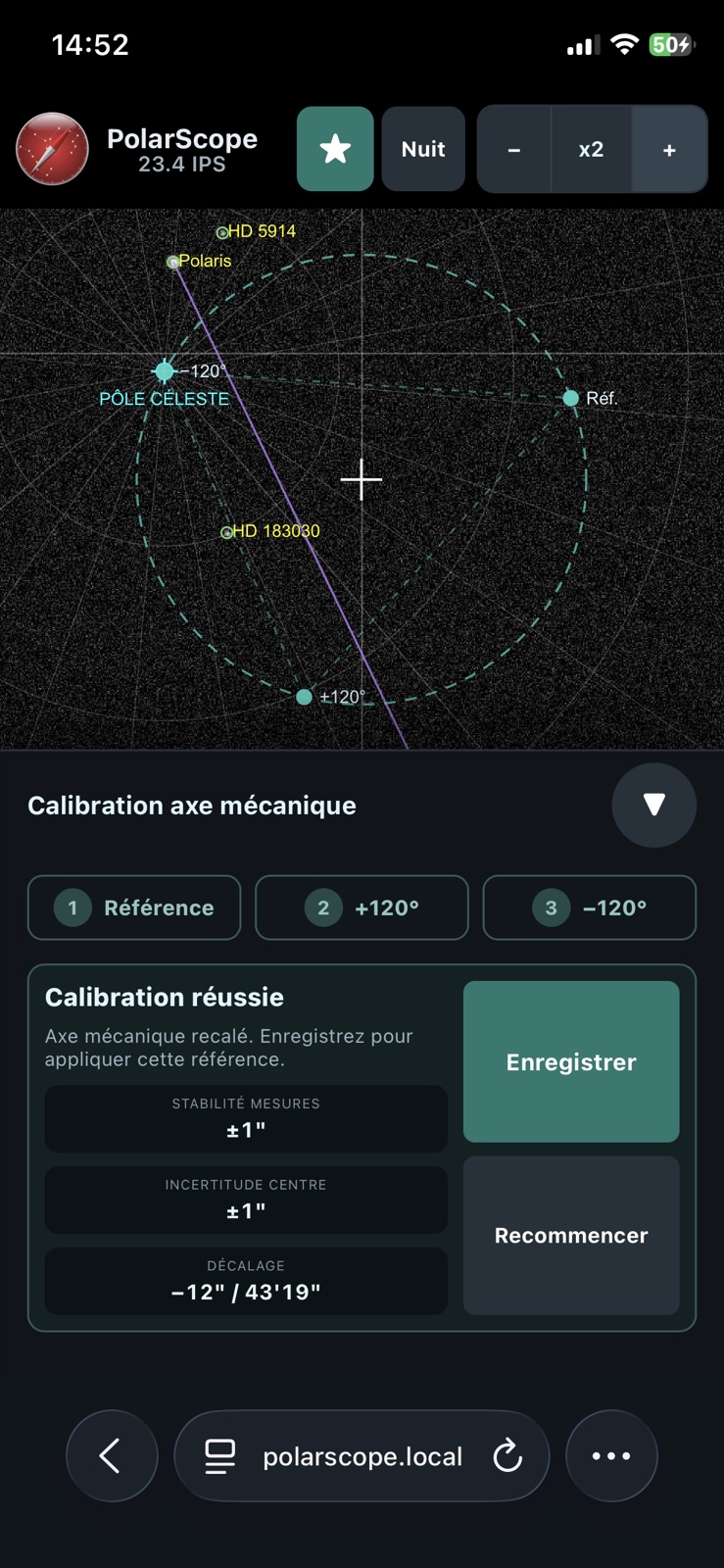
The PolarScope digital polar scope recognises the star field and determines the orientation of the mount's mechanical axis to guide its alignment with the celestial pole.

 Scientific imaging on Raspberry Pi
Acquire raw images, preview them in real time and characterise sensors: EIP brings these functions together in a standalone embedded imaging platform.
Originally developed for astronomy, Embedded Imaging Platform (EIP) combines a C++ acquisition server, web interfaces and specialised modules on Raspberry Pi. The raw data (RAW) remain accessible, together with their metadata and hardware telemetry.
Aligning a mount, filming a planet or monitoring the Raspberry Pi: each interface meets a specific need using shared acquisition, processing and storage services.
The PolarScope digital polar scope recognises the star field and determines the orientation of the mount's mechanical axis to guide its alignment with the celestial pole.
The PiNox astronomy camera records raw images for lunar, planetary and deep-sky imaging. Its automatic framing follows an object's drift within the camera's field.
A shared view of the camera stream and system status: frame rate, load, temperatures and storage.
The camera, Raspberry Pi, storage and thermal management share one enclosure. EIP handles acquisition and processing inside it; a web browser is all that is needed to control PiNox.
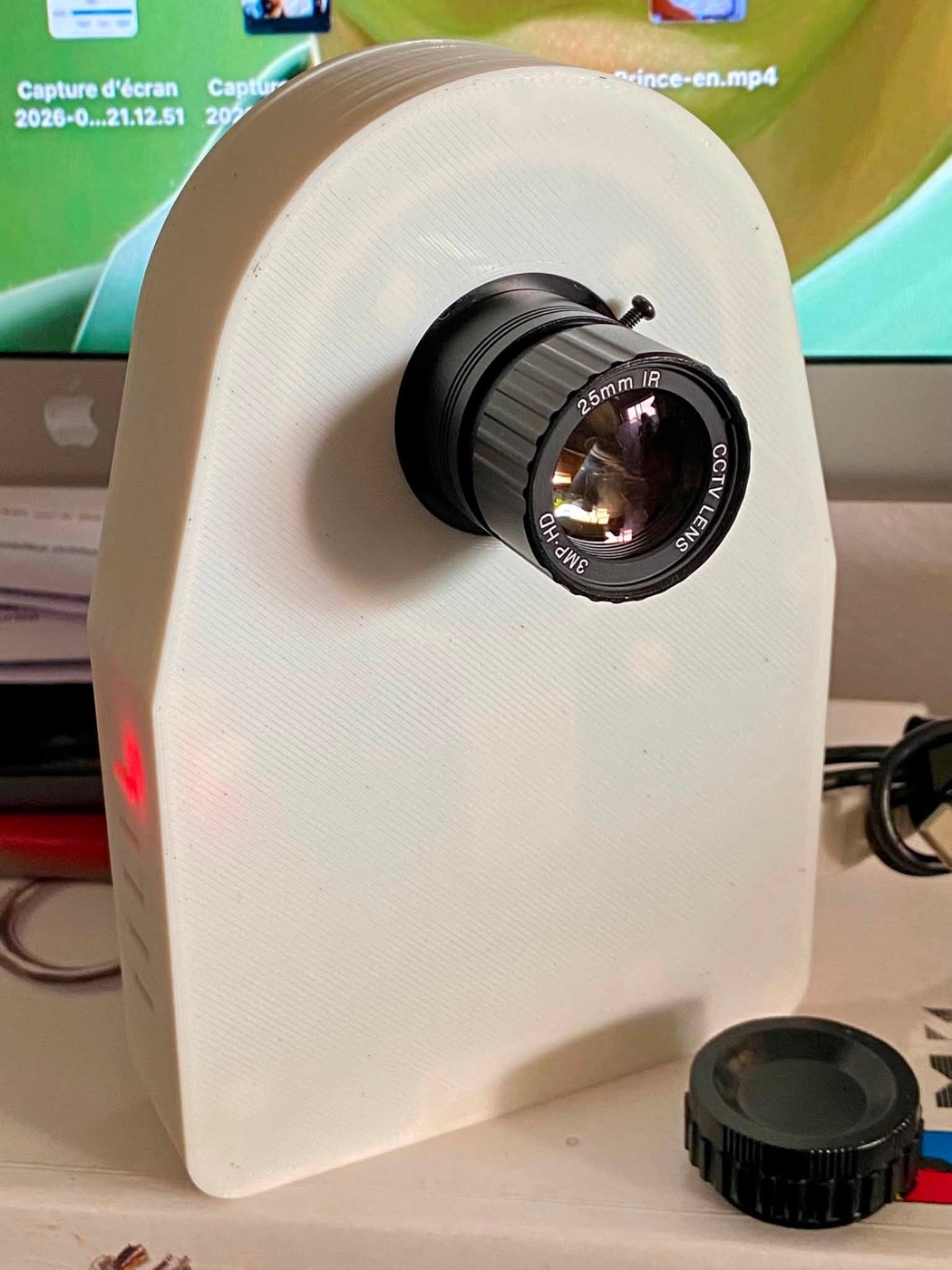
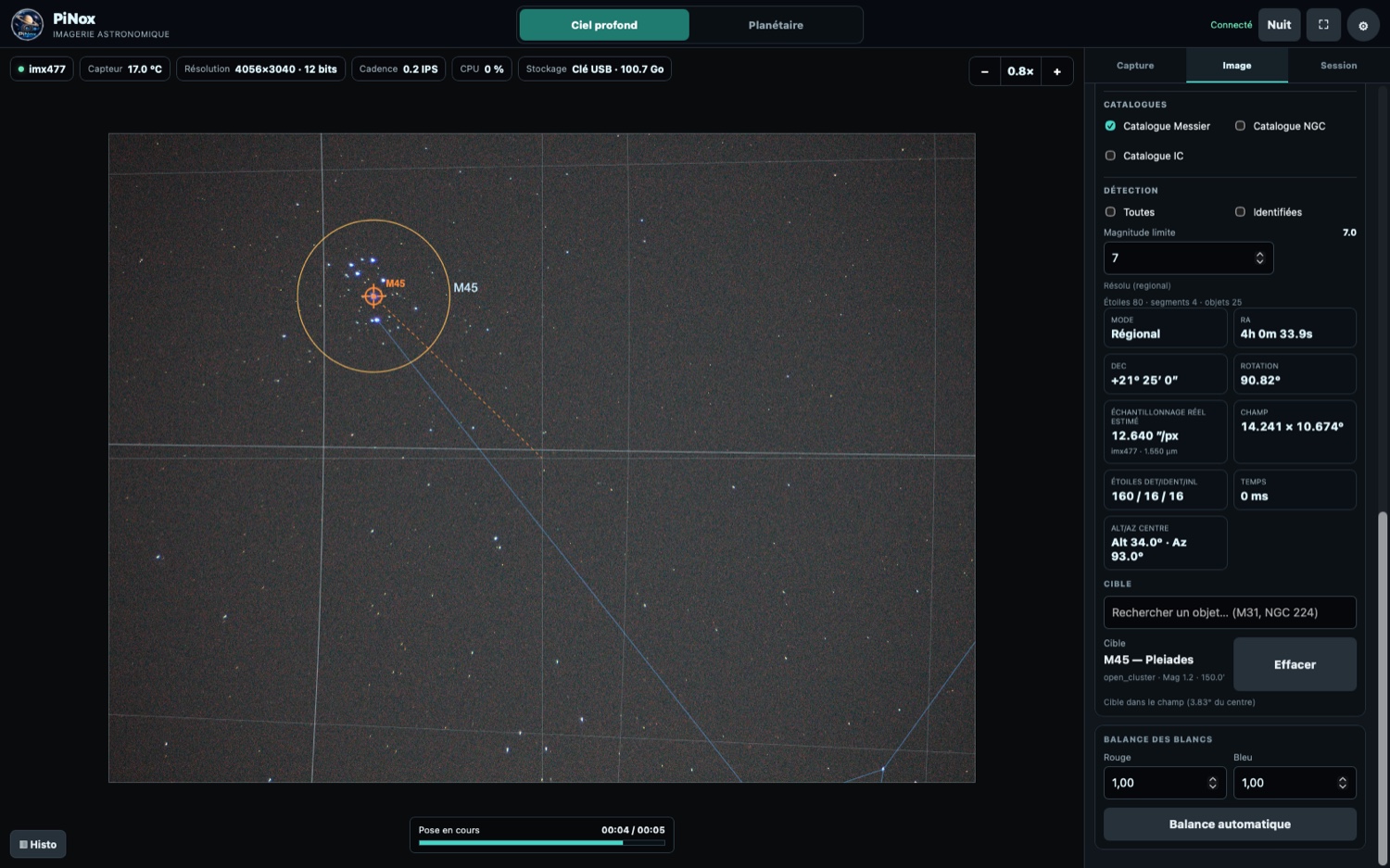
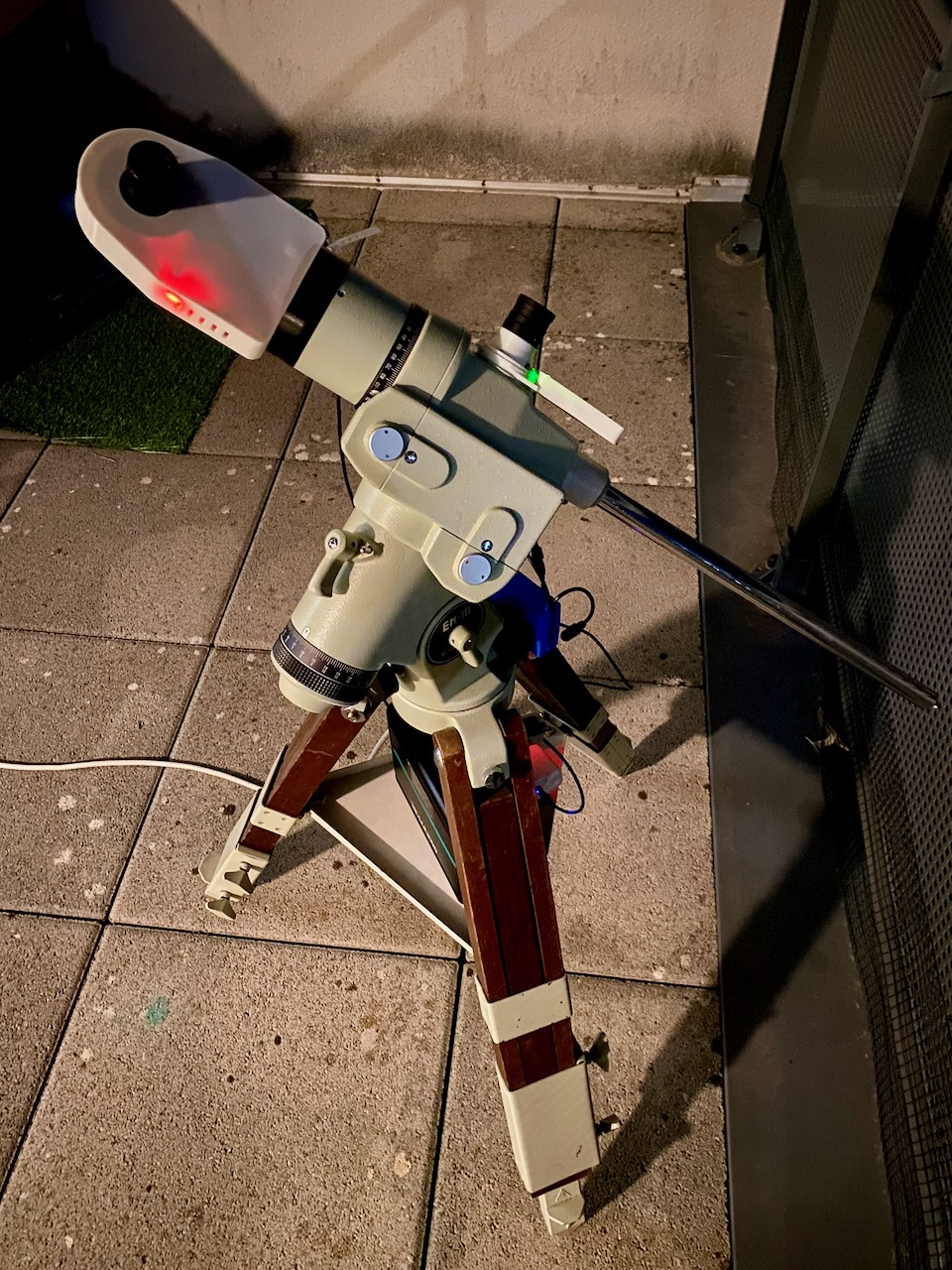
In a star field, astrometry locates the celestial pole in the image. Calibration at three positions then determines the true orientation of the mount's mechanical axis. PolarScope shows the corrections needed for polar alignment through its web interface.
The C++ server distributes acquisition, processing, web services and recording across the Raspberry Pi's cores. A single capture supplies the raw data and preview image. Applications share this chain to limit copies and conversions. Explore the architecture and measured performance.
Raspberry Pi cameras, ZWO ASI cameras, simulated sources and playback.
Raw image acquisition, previews, settings, recording and storage.
Telemetry, observing context, astrometry and scientific analysis.
Specialised interfaces sharing the images and settings of one camera.
One day, Michel wrote to me:
“I don't understand any of it, but I think it's wonderful.”
That comment made me want to offer two approaches to some articles. They cover the same experiments, with the same results and limitations. Each follows its own progression: the difference lies in how things are explained, rather than in text length.
Understand
Start with a practical question, look at images and build intuition through diagrams and analogies. Concepts and terminology emerge as the explanation progresses.
Analyse
Examine the protocol, measurements and analysis, with the equations and statistics needed to discuss the results and their limitations.
The aim: keep Michel's “wonderful” and gradually reduce the “I don't understand any of it”.
Here I describe EIP's development, field tests and measurement campaigns. Each article sets out what I could establish, the difficulties encountered and the questions still open.
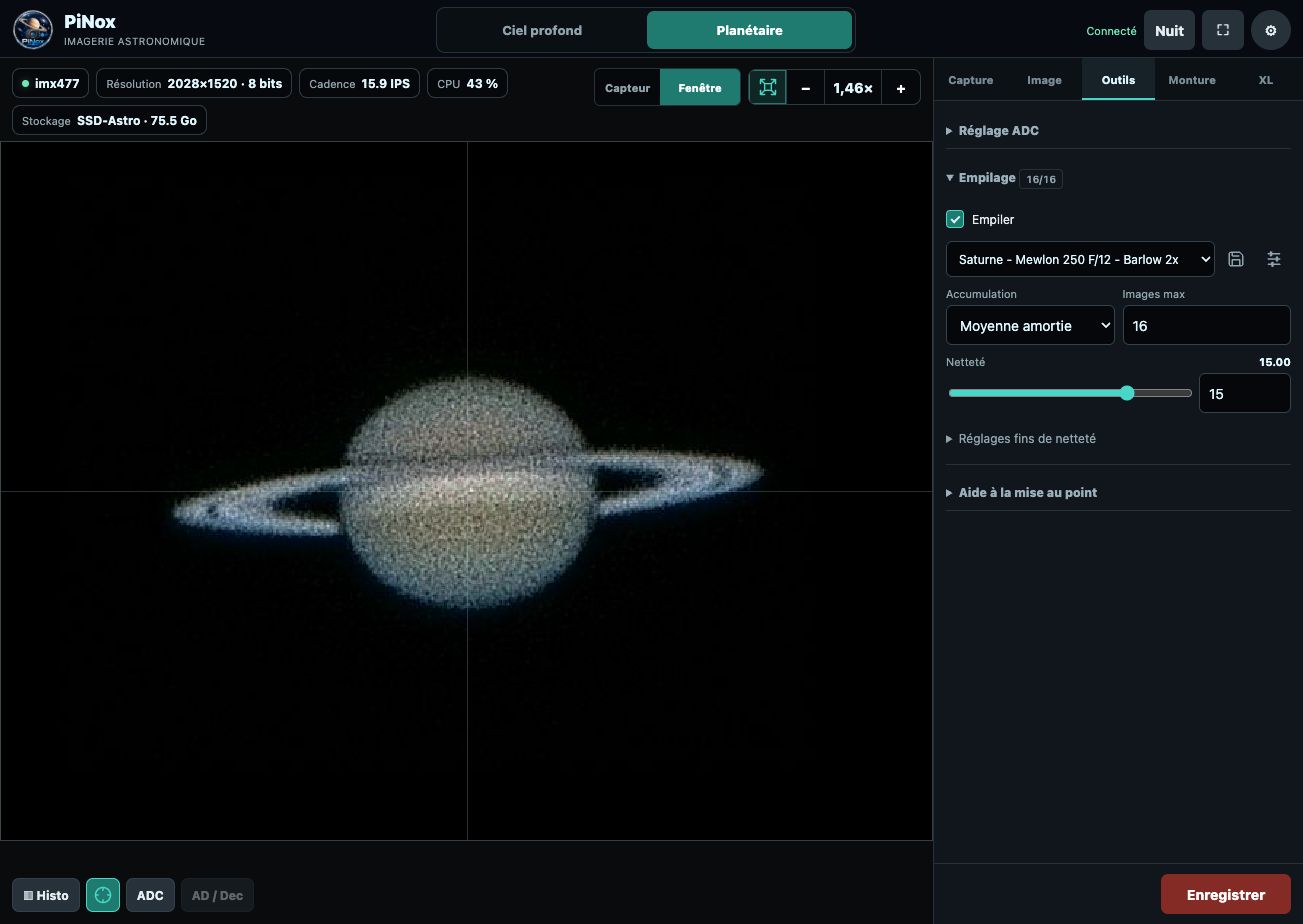
A window that follows the planet, a stacked preview to make focusing easier and a guide for adjusting the ADC, while preserving the RAW frames.
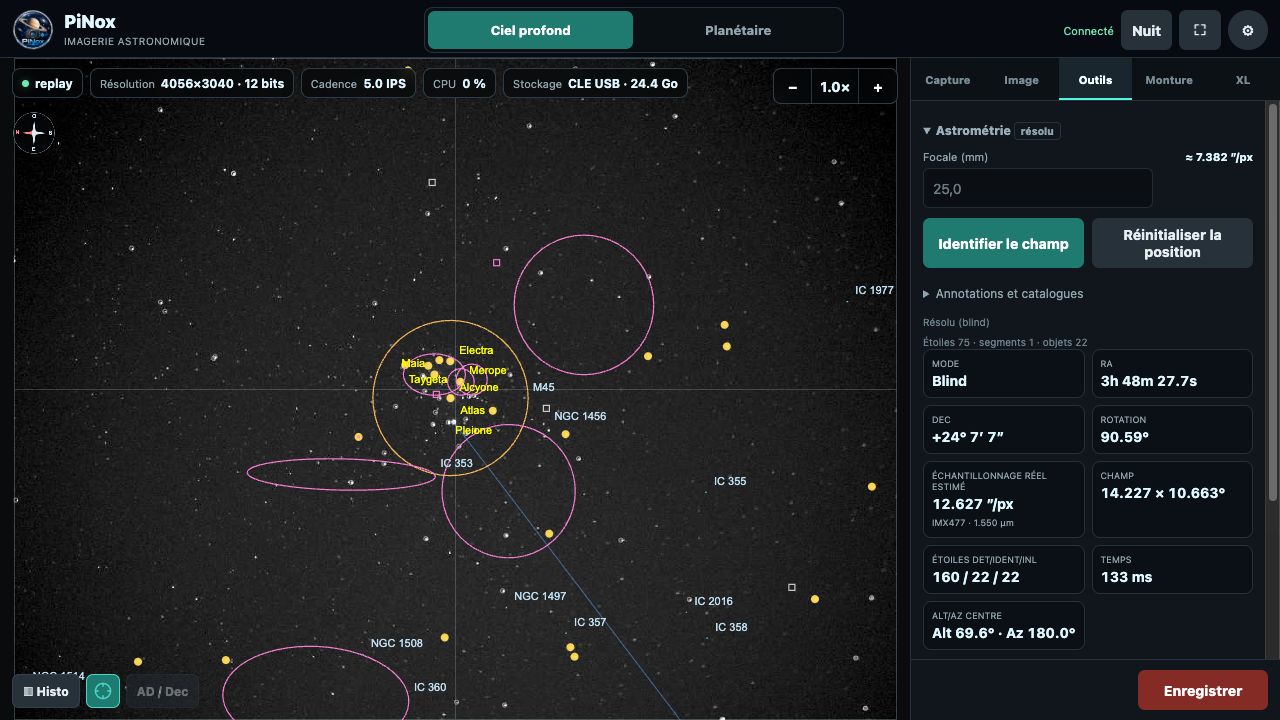
How PiNox recognises a star field and labels its objects, with help from PolarScope and two timed examples using M31 and M45.
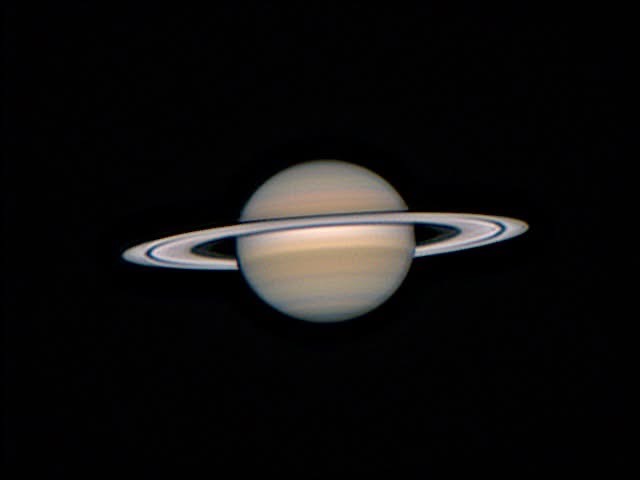
Eight videos in 8-bit RAW acquired without dropped frames, then processed with AstroSurface, without derotation. I describe the telescope setup, colour correction and automatic framing.
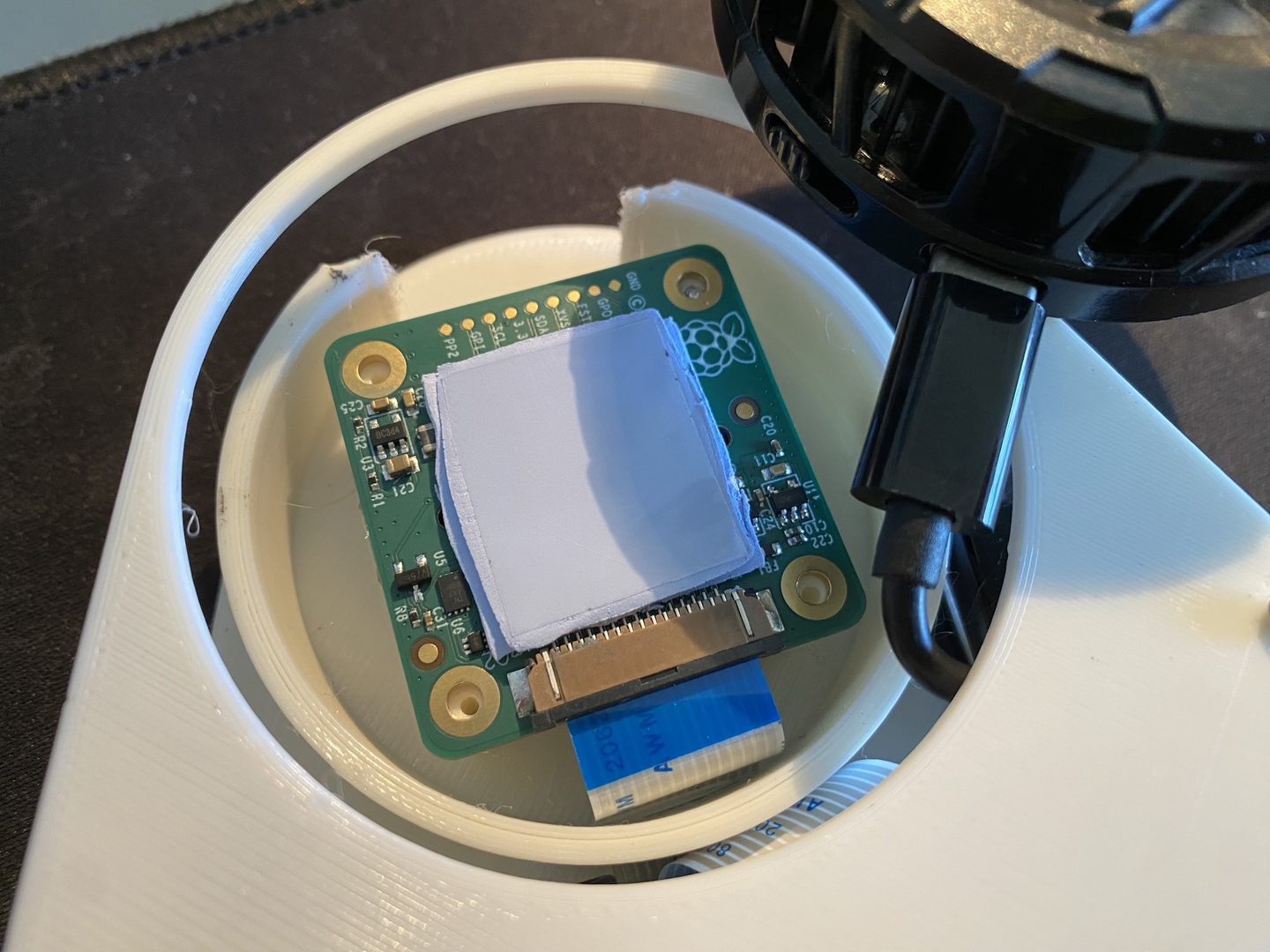
With a cooler using the Peltier effect at maximum power, the camera approaches 0 °C. What do ventilation and this cooling change in dark frames? The dark current of a typical pixel remains too difficult to isolate for a reliable measurement.
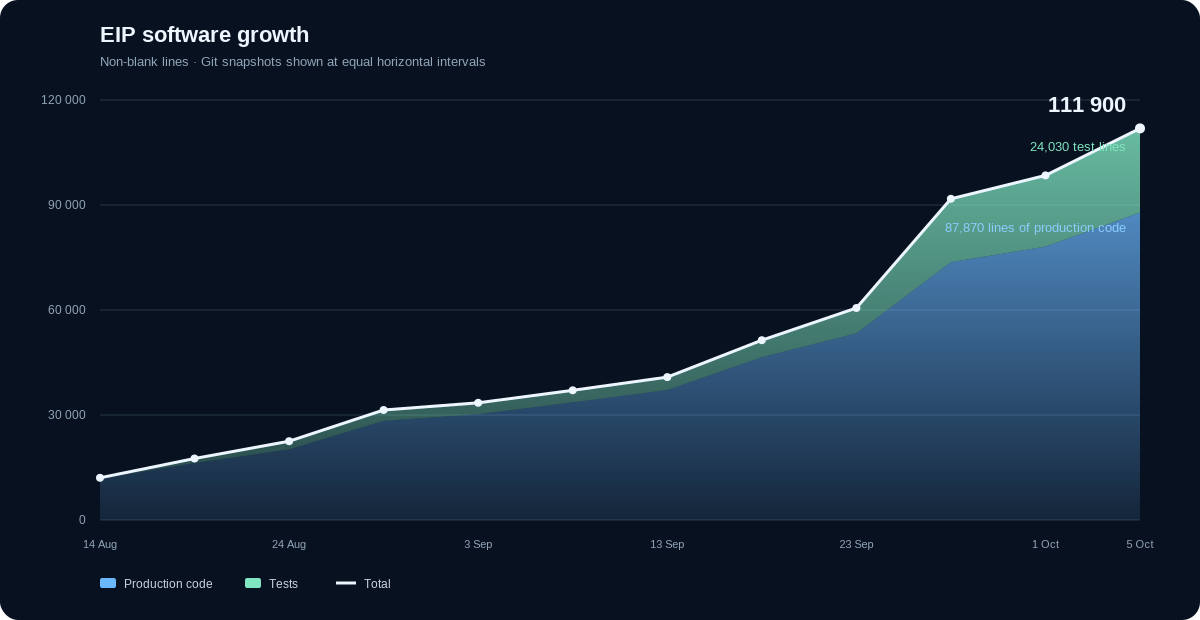
How can one acquisition supply a preview, raw recording and several web services? This article traces the transition from prototype to platform using Git history and measured performance.
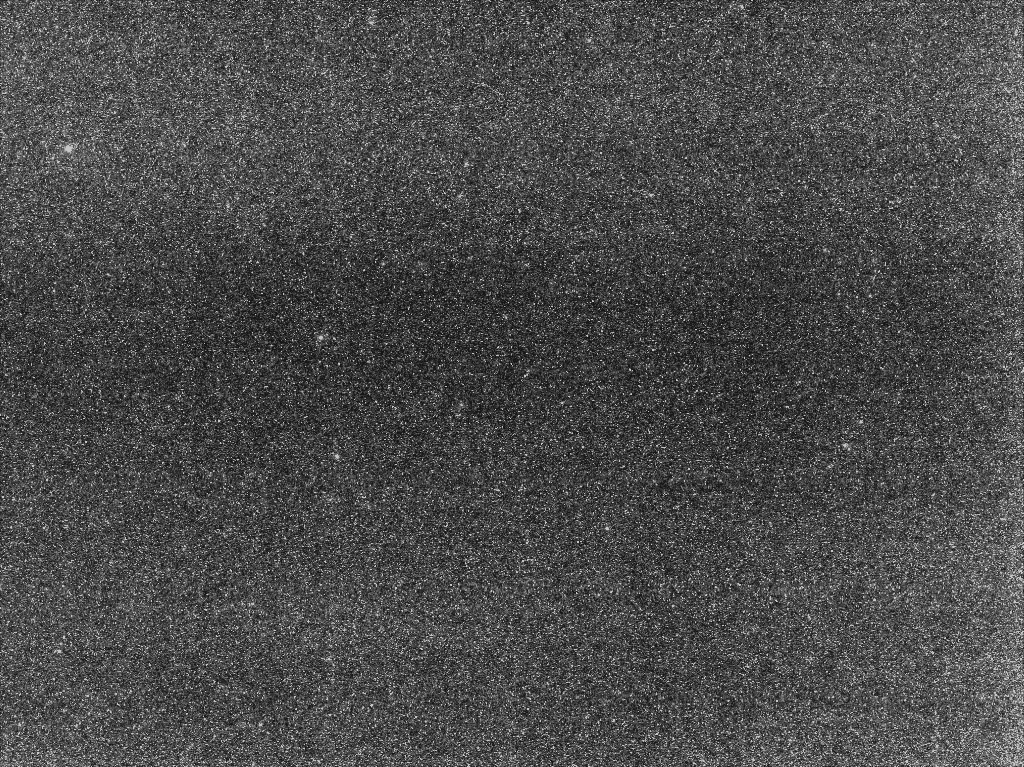
This campaign measures conversion gain and read noise, then examines long exposures and fixed patterns in dark frames. Cross-checks put the results to the test.
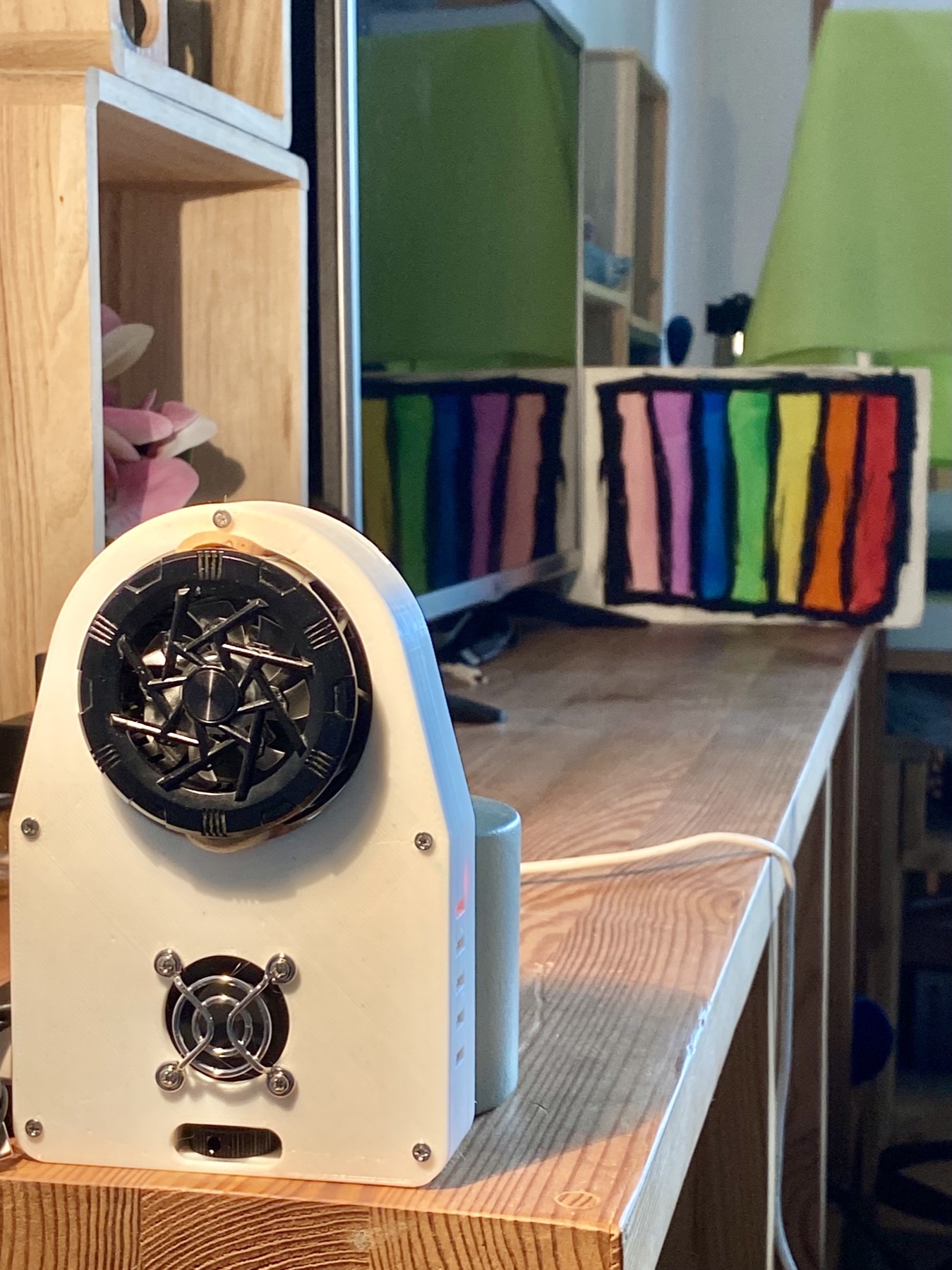
The image signal processor (ISP) in the Raspberry Pi is compared with demosaicing performed by EIP's software on IMX477 and OV5647 sensors. The study measures performance gains, black level, linearity and spatial differences between images.

I develop EIP to meet needs I encounter in the field. The acquired images and measurements then let me check my choices and continue testing.
About the author